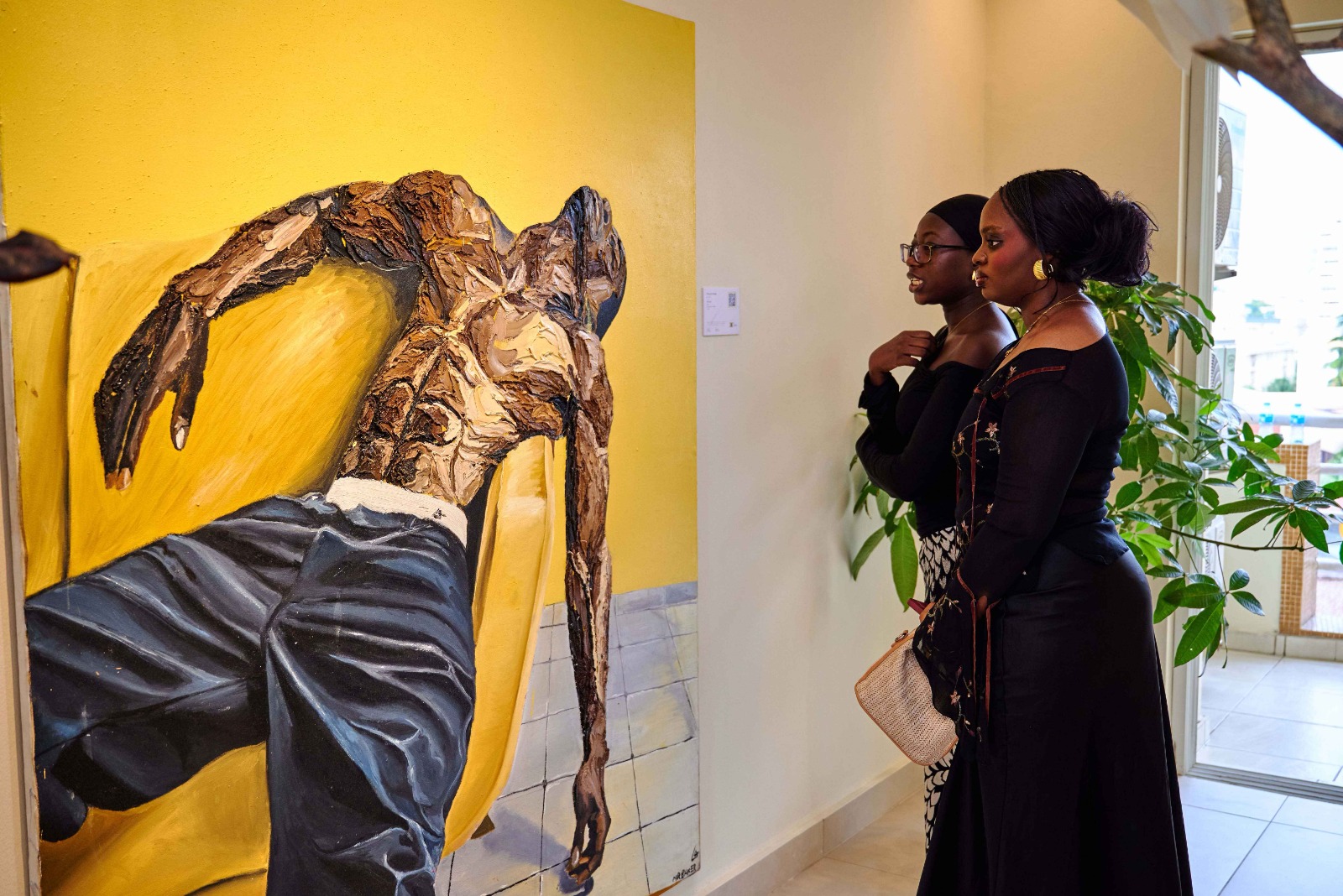
Arms lay limb and awash as necks and bodies arch back in rest, in relaxation, in relief. Without speaking to Baker himself, it is very clear the story that is being told, a “self-documentary” as he describes, birthed by a life-altering injury.
“It was a very strenuous injury that made me slow down in a way I didn’t think I could.” He said. “When you are immobile, you are stuck with your mind, and you realise how loud your mind is. So, this is a documentary of me cleaning up my mind.”
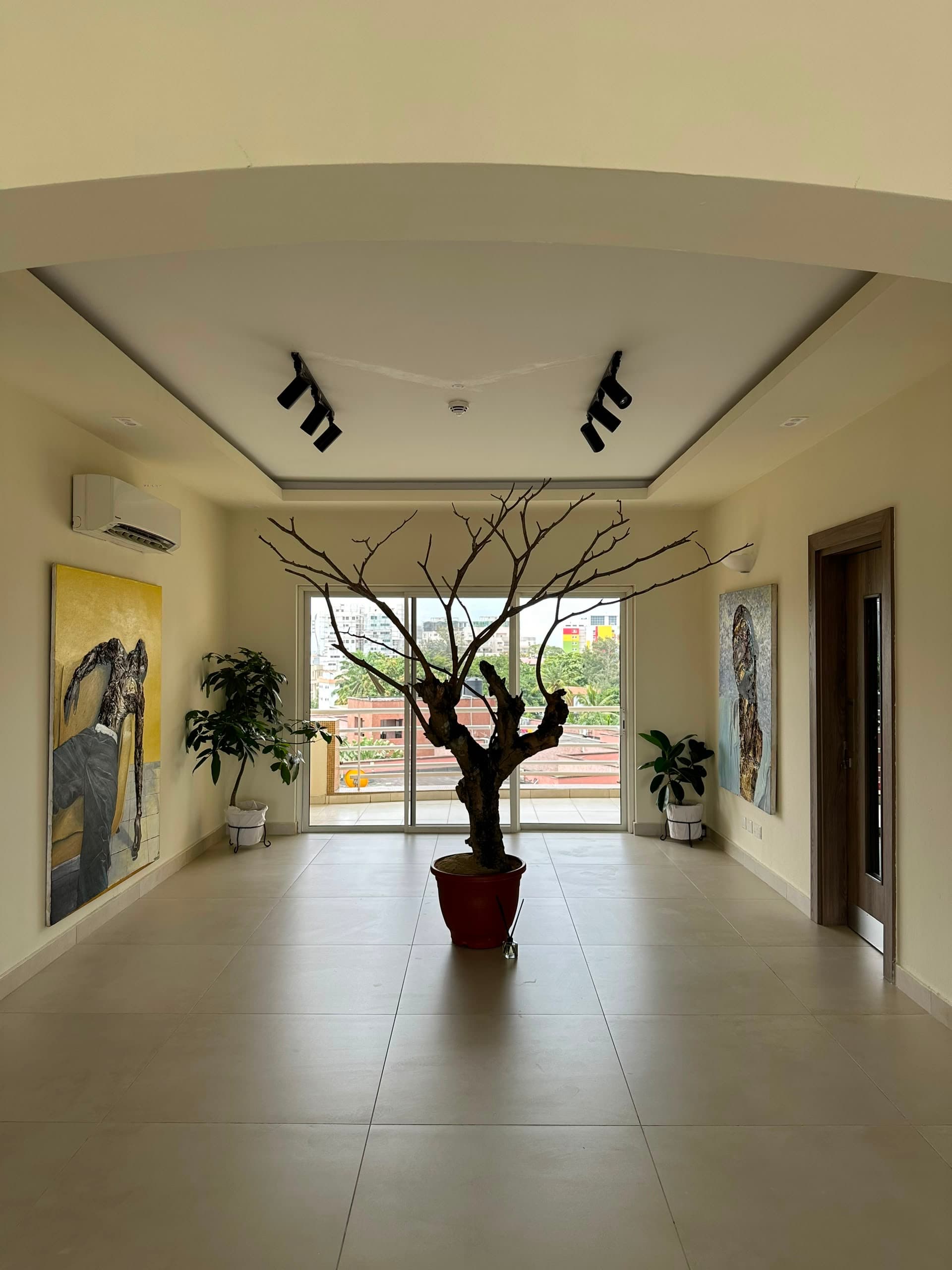
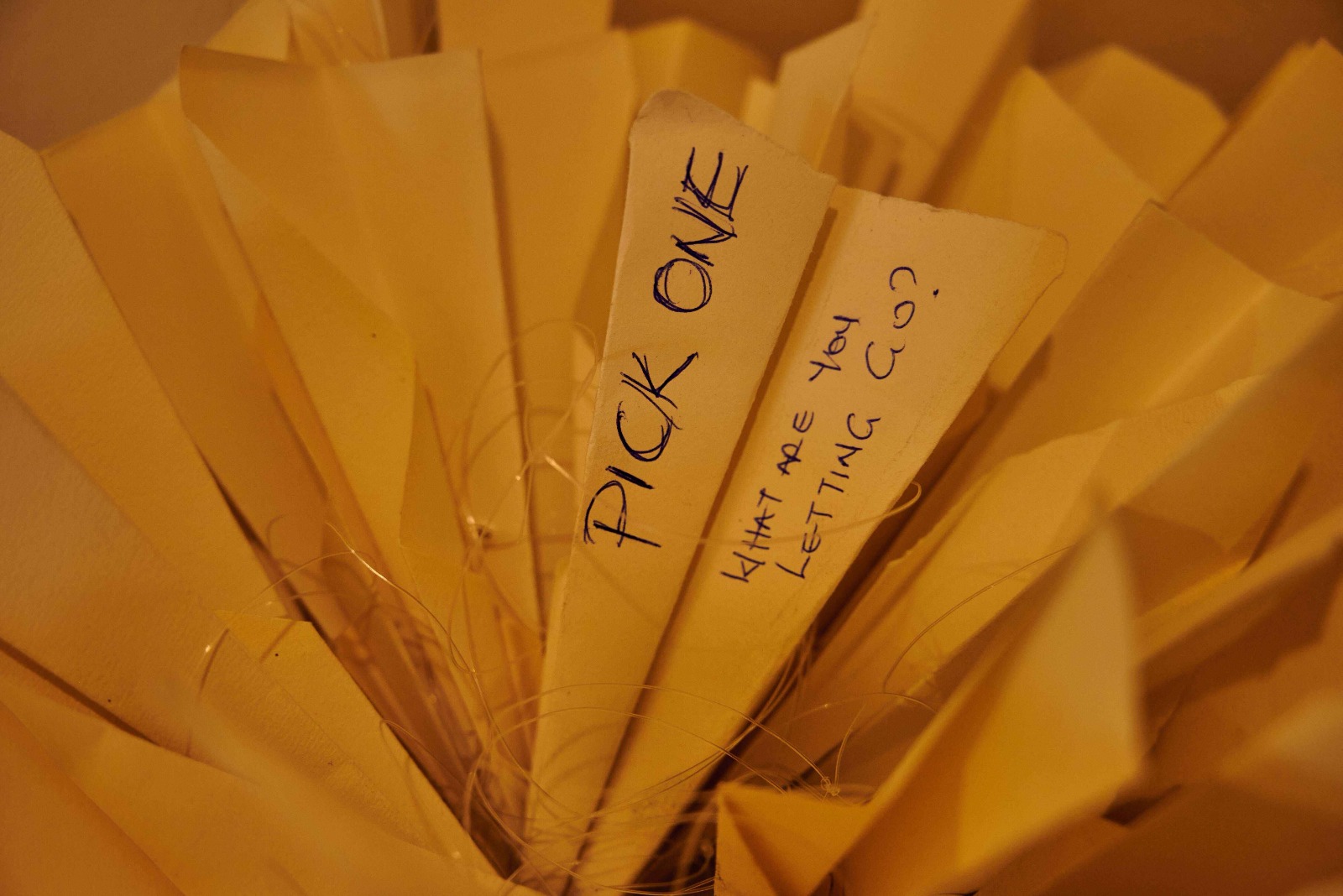
The exhibition, curated in partnership with Yaa Asantewaa Agency (YAAAS), introduced guests with blank paper planes where they could write whatever they wanted to let go of - fears, anxieties, a failed talking stage, whatever it was, would be hung up on a dying tree, ironically using the things we no longer identify with to adorn something that has lost its beauty.
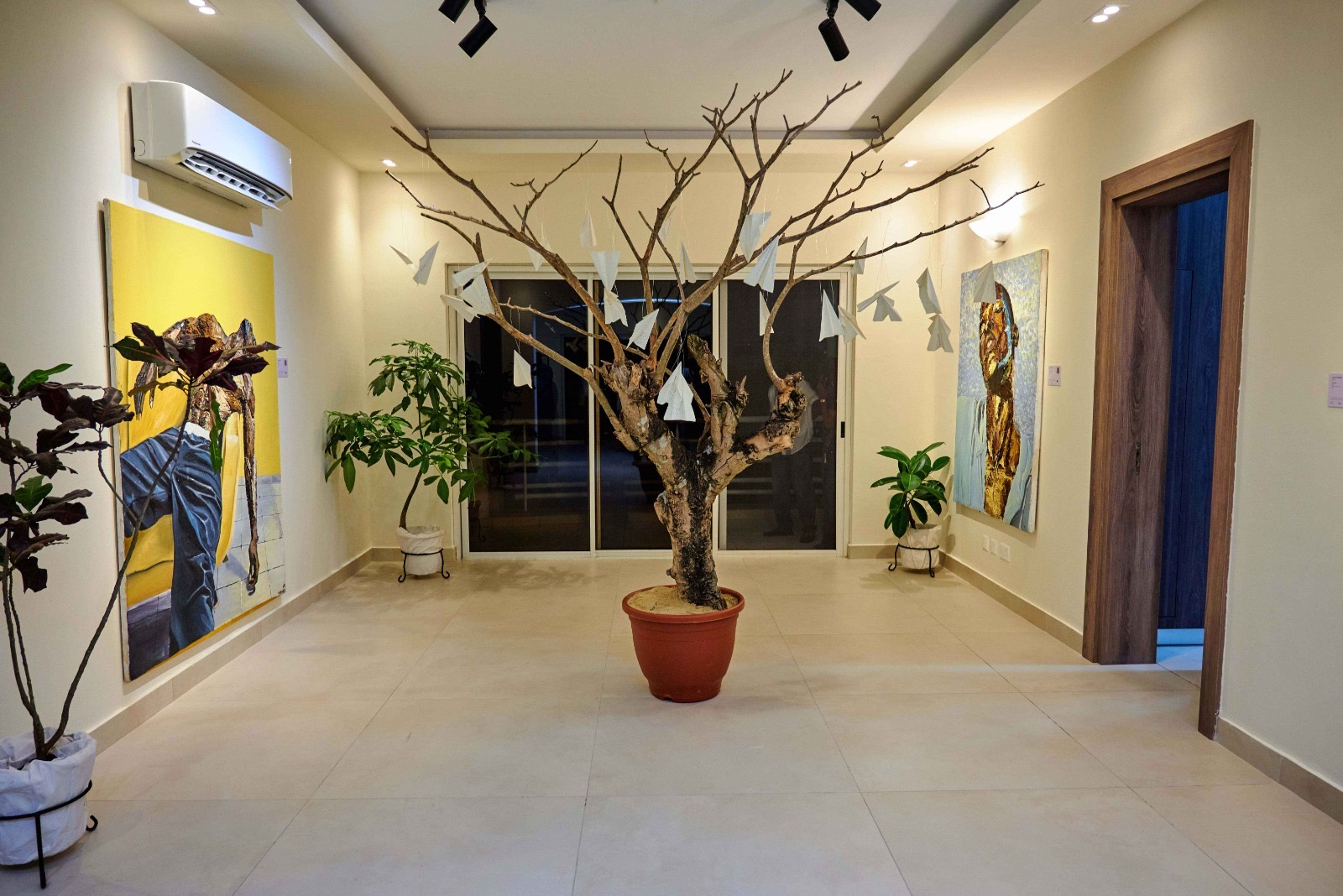
“A dead tree speaks to the exhibition,” says Baker, “I wanted people’s emotions, their stuff, I wanted to give the tree life. Making something beautiful out of something broken.” While apparent in a chronological order, each piece told different phases of Baker’s story, “It was intentionally set that way. When you walk in, I want you to feel it.” He said, making mention of the exhibition's physical space. It’s breezy, brightly-lit space and open walls, except for the final painting, hidden in a dim hallway.
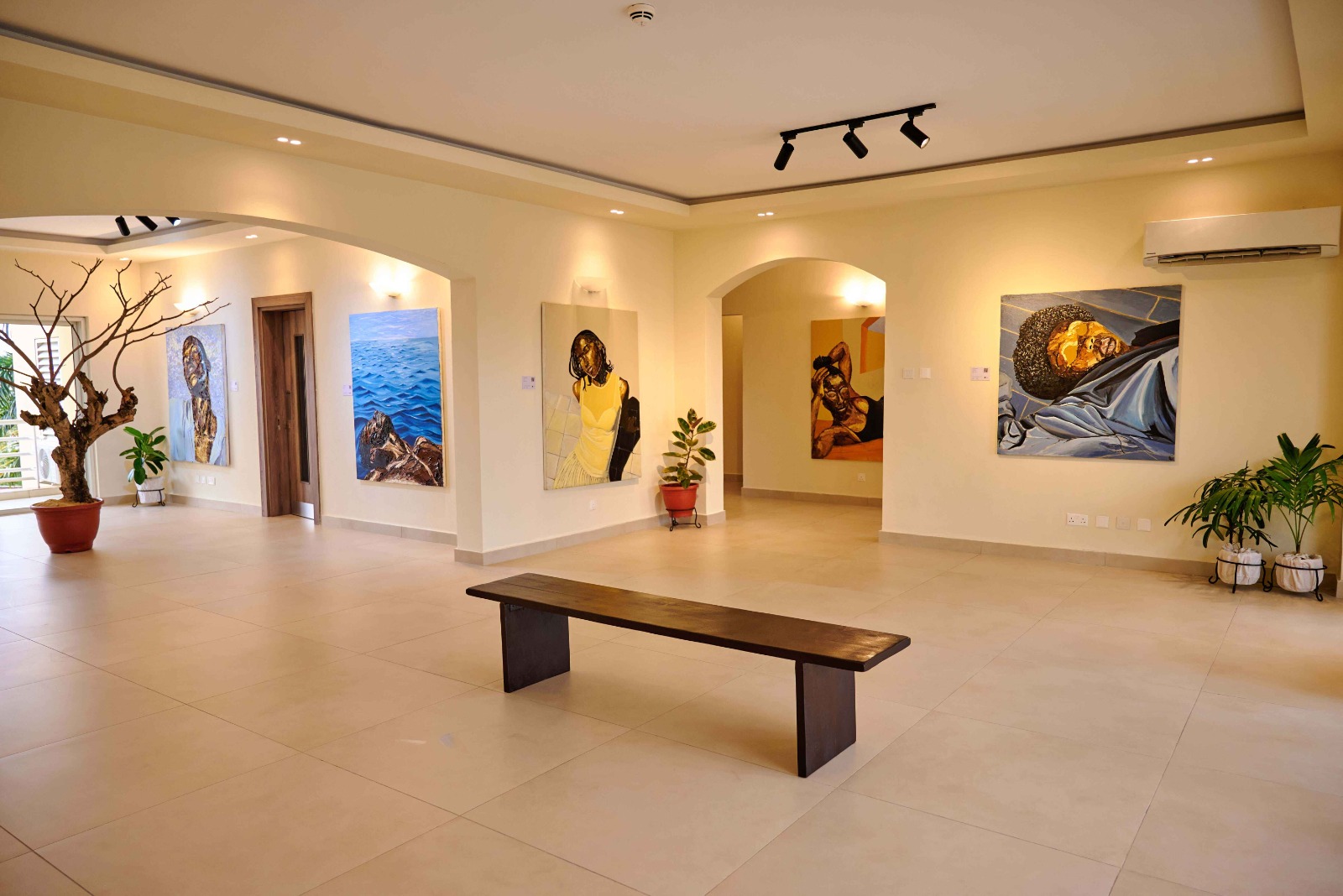
Accompanied with each piece were framed poems authored by Baker, one of which paints pain as an addictive drug. Its first three verses read: “Pain is a drug/We swear we despise/Yet sip it softly.” The collection, with each artwork crafted in oil and acrylic, are attentively titled after its visual identity. Tranquility, a head rested above the ocean as the light on the sun softly shimmers on its waves; Aftermath, a depiction of relief or rather, exhaustion. Solace, a conscious and intentional act of rest and restoration; Dreaming of heaven, tagged as a serene moment of longing, the subject floating between the pendulum of comfort and a desired ease. A common theme found in these pieces is the absence of obvious, glaring eyes. The one place where emotion is most evident becomes amiss right up until the final piece that embodies the entire theme, Catharsis.
“If I painted eyes,” he says, “You’d be thinking about the person, not the feeling or the emotion. With eyes closed, you’d wonder what the person is thinking, or where they are. You’re able to focus on the person and everything else without the eyes.” Baker continues, “The eyes are basically a tunnel to the soul.”
In the final painting, the release is aptly evident. What is almost a violent exhale is expressed in a mouth-open wide scream and bulging eyes - with a hint of red across its corner.
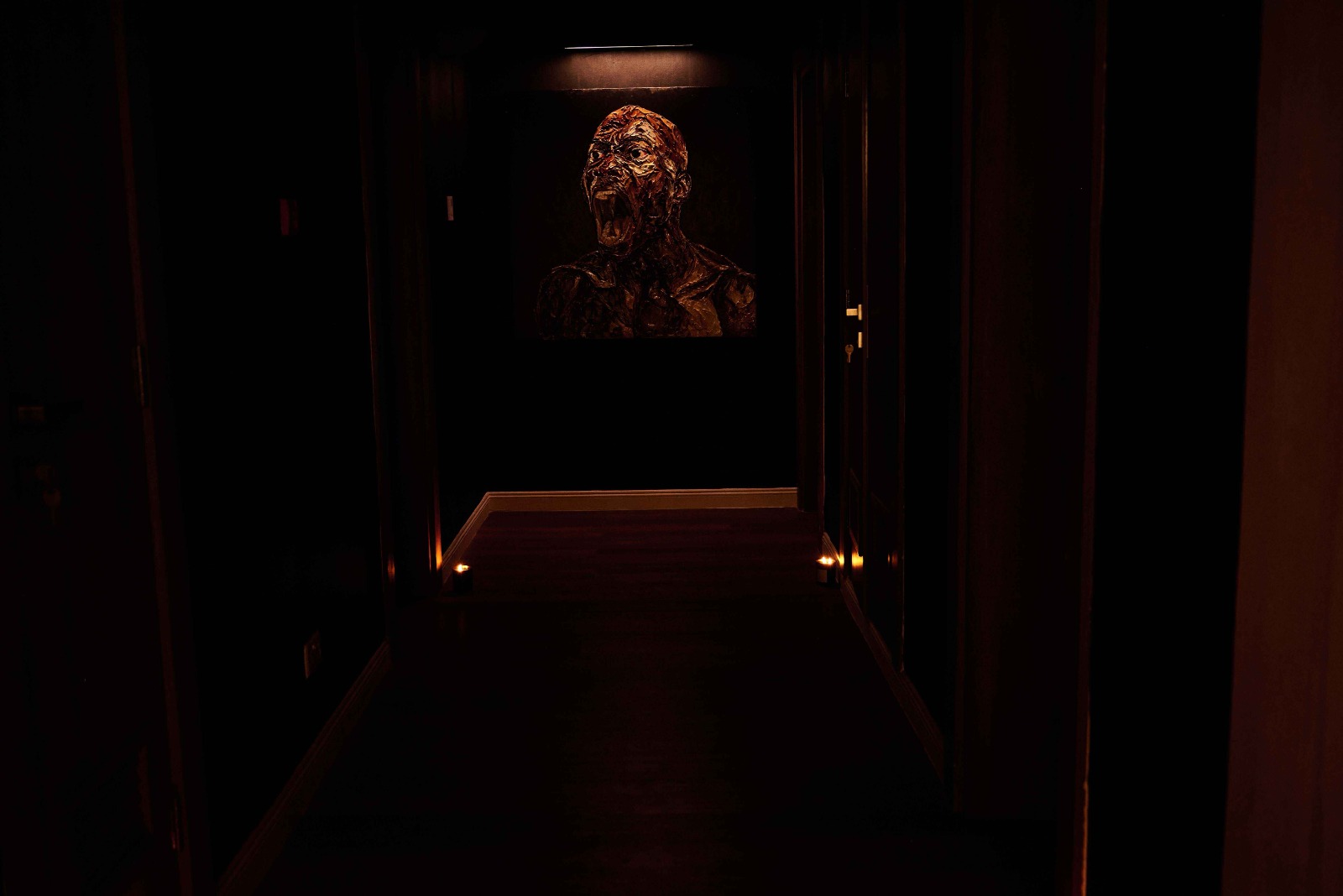
“Catharsis is the beginning and the end. When you go through a life-changing process like I did, you’re just very exhausted, frustrated and tired of how you feel, the life you’re living, how you process things. So what do you do? You scream.”

Mr. Baker invites his audience on a similar journey to do the same, to be intentional about rest, to find solace and serenity, to dream of paradise, and to let go of any weight we carry.